Eight short classic novels you can read in a weekend
Every one under 200 pages, grouped by mood, with the translation to buy where it matters
By the Editor22 November 20263 min read8 books
This site earns from qualifying purchases as an Amazon Associate and Bookshop.org affiliate, at no extra cost to you. Every book here was chosen by hand. How this works
The idea that a classic has to be long comes from a few famous examples, and it keeps people away from the shelf. Plenty of the books that have lasted are short, and several of the best were written to be read at a sitting.
This list keeps to novels and novellas under 200 pages, with one short story so famous it belongs here. They are grouped by mood rather than by date: momentum, quiet tension, strangeness, and dread. Where a book was written in another language the translation to buy is named, because for Camus and Kafka in particular the difference between translations is the difference between liking the book and not.
None of these needs a study guide. Read them for pleasure first; the arguments about them will keep.
Translated by Matthew Ward, Vintage International, 1989
Meursault shoots a man on a beach and the novel is about why he cannot make himself say he is sorry, told in sentences as flat and bright as the Algerian sun. Matthew Ward’s translation restores that flatness; Stuart Gilbert’s older version makes Camus sound more English and more apologetic than he is. Ideal for readers who want to understand why people still argue about this book, in an afternoon.
A farmyard revolution that curdles into dictatorship, told plainly enough for a child and sharp enough to have been banned in several countries. Orwell wrote it in a few months and nothing in it is wasted. Ideal for anyone who thinks political fiction has to be long or dull, and for rereading every time a slogan changes overnight.
A man wakes as a giant insect and the horror is not the insect but how quickly his family adjusts. Susan Bernofsky’s translation is the most alive to Kafka’s dry comedy; Stanley Corngold’s Bantam edition is the scholarly alternative with good notes. Ideal for readers who think they do not like Kafka and have only met him in quotations.
Also considerStanley Corngold’s translation (Bantam Classics) if you want an introduction and critical essays alongside the text.
Two drifters, one small dream of a farm, and a hundred pages that end exactly where you fear they will. Steinbeck wrote it to be read in one sitting and staged the next night, and it still works both ways. Ideal for readers who want to be moved without being manipulated, and for anyone coming back to it after school.
On a liner to Buenos Aires a world chess champion meets a stranger who learned the game in a Gestapo cell, and Zweig’s last novella turns a board game into a study of what isolation does to a mind. Joel Rotenberg’s NYRB translation is crisp and the edition is handsome. Ideal for readers who like psychological tension more than plot, and for a single long evening.
Holly Golightly on the page is sharper, sadder and less tidy than the film allowed, and Capote’s narrator watches her with a mix of love and clear sight that the camera never managed. The Vintage edition adds three short stories, including “A Christmas Memory”, which alone justifies the price. Ideal for readers who know the movie and suspect the book is better.
Translated by Ann Goldstein, Vintage International, 2007
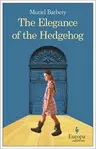
A French silkworm merchant travels to closed Japan four times in the 1860s and falls in love with a woman he never speaks to, in a novella built from short, repeated paragraphs that read like a fable. Ann Goldstein’s translation keeps Baricco’s plainness. Ideal for readers who want something luminous and strange that fits in a coat pocket.
A woman prescribed rest for her nerves is confined to a room with hideous wallpaper and begins to see someone moving behind the pattern, in a story of about 6,000 words that remains the sharpest account of being disbelieved by a doctor. The Dover edition is pocket-sized and costs almost nothing. Ideal for readers who want Gothic horror with a point, and for anyone who has ever been told to calm down.
If you want a reading order: start with Steinbeck or Orwell for momentum, take Camus and Zweig when you have a quiet evening, and keep Gilman for a night when you want to be unsettled. Every one of these fits in a weekend; several will stay with you for years.
English readers know French literature mainly through its 19th-century dead. These seven novels, all published this century and all in strong translations, show what French fiction has been doing since: family sagas, social noir, a Goncourt-winning thriller and a Nobel laureate’s collective memoir.
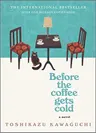
Japanese fiction in English is now a crowded shelf, and the famous names are not always the right place to begin. These eight novels, most under 250 pages, are the way in: cafés and libraries, a convenience store, a mathematician with an eighty-minute memory, and finally a snow-country inn.
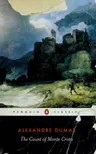
Before you spend a month with Edmond Dantès you have one decision to make: which English text. The modern Penguin translation, the Victorian text in cheap and collectible editions, one honest abridgement and the audiobook, compared.
22 November 20263 min read5 books
The Monthly Reading Dispatch
One letter a month. Five books, one translation note, no noise.